
The Critical Role of Silicone Casting and Prototyping in Plastic Product Development
Silicone Casting, Injection Molding, and Prototyping Expertise | TONGDA LINK
In the dynamic world of product development, prototyping isn’t just a step—it’s the cornerstone of innovation.
But what exactly is prototyping? It’s the process of turning abstract ideas into functional models, enabling rigorous testing and refinement before mass production. From 3D printing and CNC machining to silicone casting, rapid injection molding and precision tooling, today’s technologies empower faster, smarter prototyping.
At TONGDA LINK, we combine decades of mold-making expertise with cutting-edge prototyping solutions. Whether you’re iterating a design or preparing for full-scale production, we’re here to ensure your product is both market-ready and manufacturable.
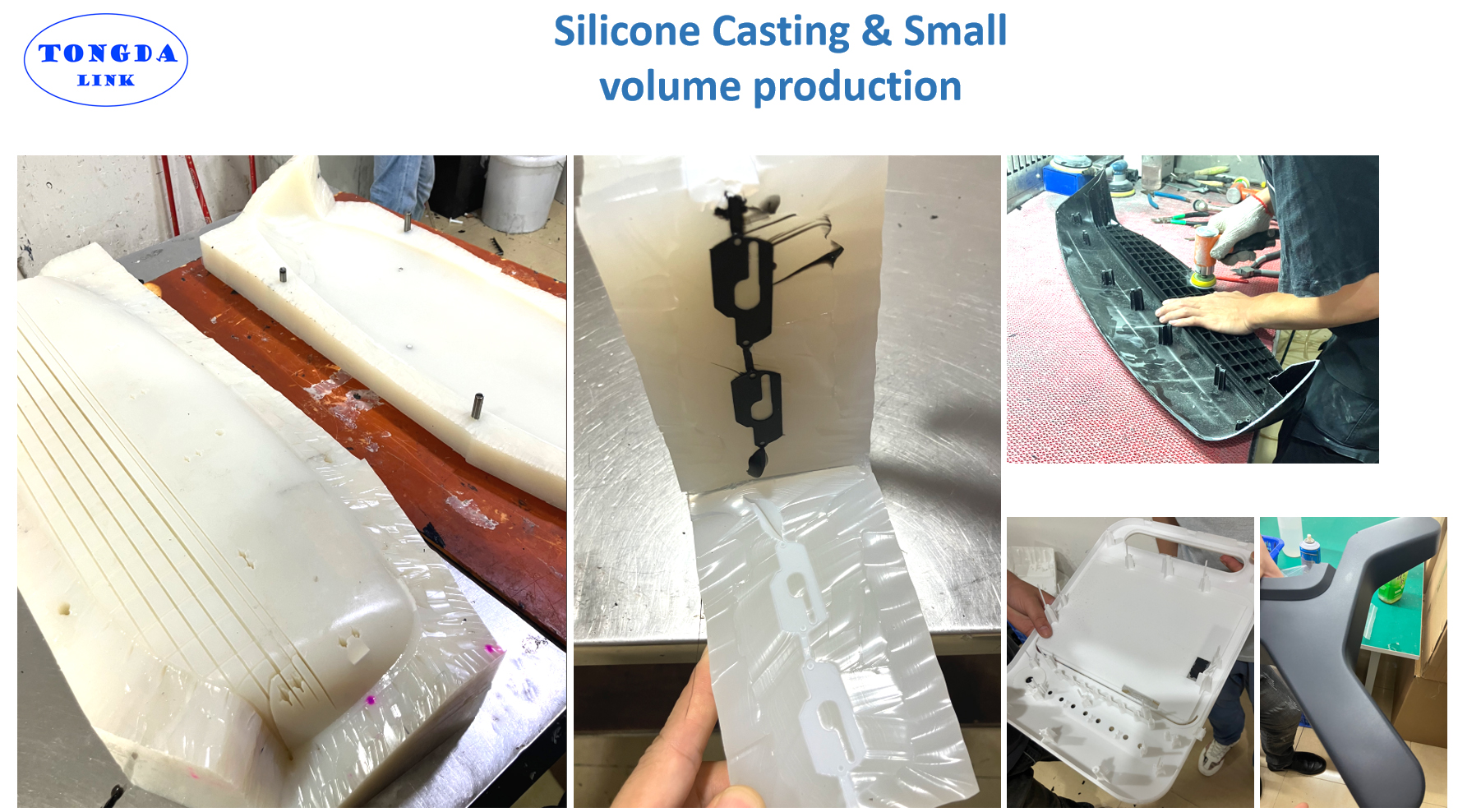
While 3D printing, CNC machining, and silicone casting all play vital roles in prototyping, many customers lean toward silicone casting. Why?
Silicone casting offers distinct advantages that make it ideal for certain projects:
✅ Material Versatility: Simulate final production materials (like rubber, urethanes, or soft-touch plastics) with unmatched accuracy.
✅ Cost-Efficiency: Perfect for small batches—produce 10-50 high-quality prototypes without expensive tooling.
✅ Surface Finish: Achieve smooth, detailed, and production-ready surfaces right out of the mold.
✅ Speed & Flexibility: Rapid mold creation (1-3 days) and easy design tweaks during iteration.
Curious if silicone casting fits your project? Let’s explore how this method can accelerate your prototyping phase while cutting costs. 💡
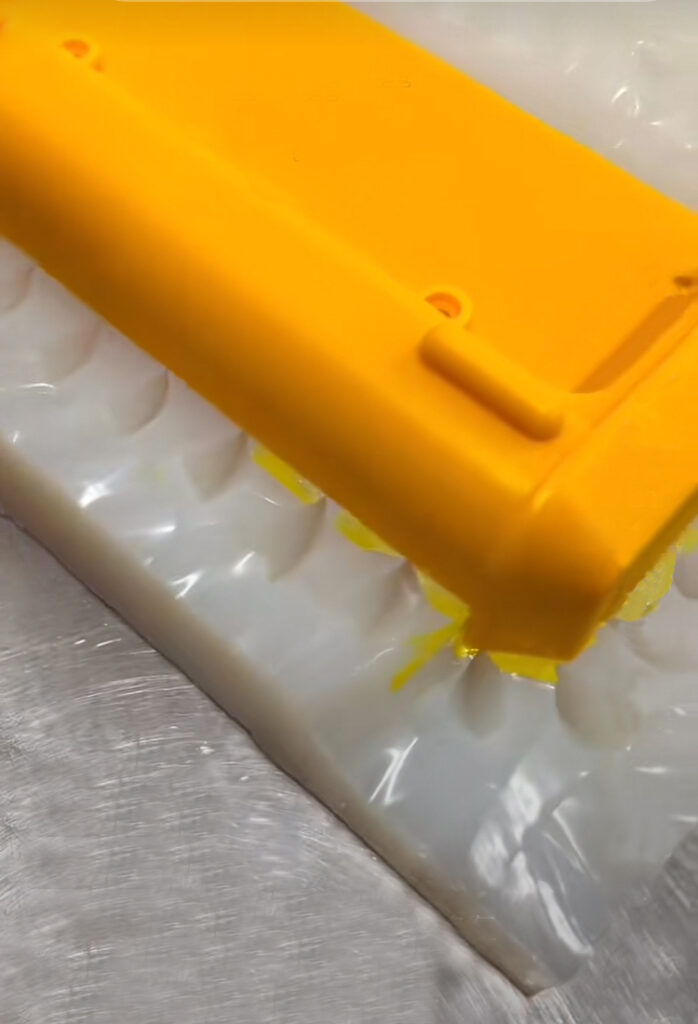
What is Silicone Casting?
Silicone casting is a manufacturing process where liquid silicone rubber is poured into a mold to create a flexible, durable, and detailed part or product. The process involves creating a master model (often 3D printed or machined), making a mold from that model, and then pouring silicone into the mold to produce the final part. It is widely used for prototyping, small-batch production, and creating complex shapes.
Difficulties in Silicone Casting Manufacturing
Mold Creation:
Designing and creating an accurate mold can be challenging, especially for complex geometries.
The mold must be free of defects to ensure the final product has a smooth surface finish.
Material Handling:
Silicone rubber has a specific curing time and viscosity, which requires precise control during mixing and pouring.
Air bubbles can form during pouring, leading to defects in the final product.
Curing Process:
The curing process must be carefully controlled to ensure the silicone sets properly without warping or shrinking.
Temperature and humidity can affect the curing time and quality.
Demolding:
Removing the cured silicone from the mold without damaging the part or the mold can be tricky, especially for intricate designs.
Cost:
While silicone casting is cost-effective for small batches, the initial cost of creating high-quality molds can be high.
Applications of Silicone Casting in Industries
Silicone casting is a versatile manufacturing process with applications across various industries. While it has some challenges, its advantages in flexibility, detail reproduction, and material properties make it a popular choice for prototyping and small-scale production.
Prototyping in product design and development to create prototypes that mimic the final product’s flexibility and durability, most used for Medical Devices, Automotive, Consumer Products, Art and Sculpture, Electronics, etc.
Air Entrapment: Air bubbles can form in the mold, leading to defects in the final prototype.
Material Degradation: Silicone molds can degrade over time, especially with high-temperature resins.
Dimensional Accuracy: Maintaining tight tolerances can be difficult due to material shrinkage.
Vacuum Degassing: Our advanced vacuum systems eliminate air bubbles, ensuring flawless surface finishes.
High-Temperature Silicones: We use premium-grade silicones that withstand high temperatures, extending mold life and durability.
Precision Engineering: Our team employs meticulous design and process control to minimize shrinkage and maintain dimensional accuracy.
By integrating silicone casting with 3D-printed master patterns and CNC-machined prototypes, we ensure seamless transitions to injection molding production.
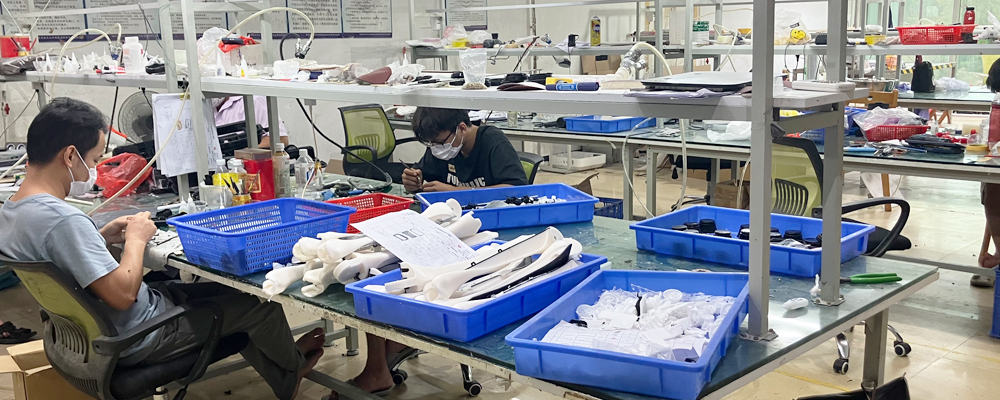
As we all know, the parts demolded from silicone casting mold need a fine repairing process to a near-perfect finish. How does TONGDA LINK to ensure the parts meet functional and aesthetic requirements of customers? Espercially for critical applications (e.g., medical or automotive), test repaired parts for durability and performance.
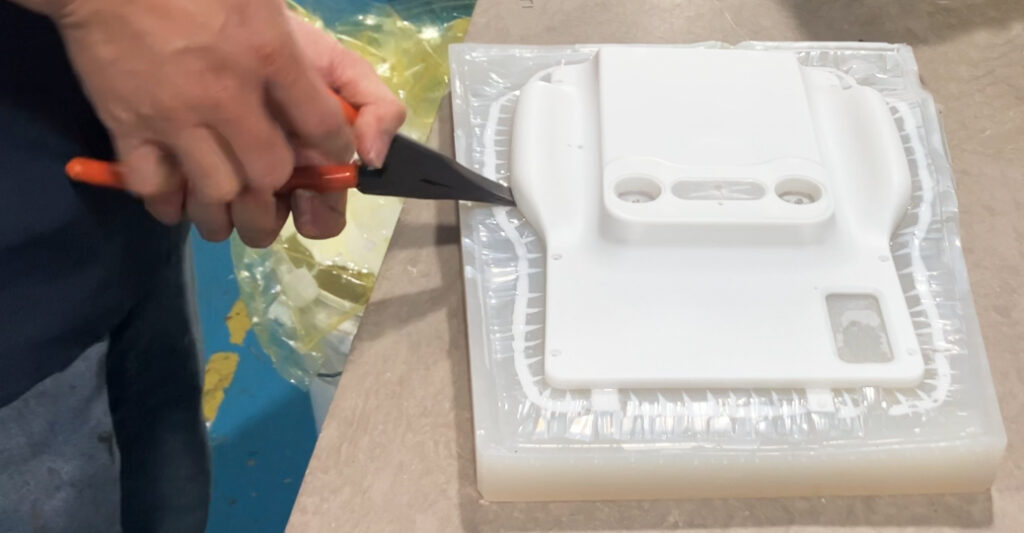
TONGDA LINK is the expert in the prototyping, we will repair the silicone casted parts step by step.
1. Inspect the Demolded Part
Examine the part under good lighting to identify defects like:
Seam lines (from mold separation).
Air bubbles (trapped during pouring).
Surface roughness (from mold texture or incomplete curing).
Flash or excess material (silicone leakage into mold gaps).
Warping (due to uneven cooling or demolding).
2. Remove Flash and Excess Material
Tools: Scalpel, precision knife, or fine-grit sandpaper.
Carefully trim excess material (flash) along edges or seams.
Use a sharp blade to avoid tearing the plastic.
3. Smooth Surface Imperfections
Sanding:
Start with coarse-grit sandpaper (e.g., 200–400 grit) to level rough areas.
Progress to fine-grit sandpaper (800–2000 grit) for a smooth finish.
Wet sanding (using water) reduces dust and prevents scratches.
Polishing:
Use a microfiber cloth and plastic polish to restore gloss.
For matte finishes, avoid polishing and stick to fine sanding.
4. Fill Gaps and Air Bubbles
Epoxy Putty or Filler:
Mix a small amount of epoxy or plastic filler.
Apply to gaps or bubbles, let cure, then sand smooth.
UV-Resin:
For tiny holes, apply UV-curing resin and cure with a UV light.
Sand flush after curing.
5. Fix Warping
Heat Treatment:
Use a heat gun or hot water bath to gently warm the warped area.
Bend the part back into shape and hold until cool.
Avoid overheating, which can melt or deform the plastic.
6. Eliminate Seam Lines
Sanding:
Sand seam lines progressively with fine-grit sandpaper.
Solvent Welding (for thermoplastics):
Apply a small amount of solvent (e.g., acetone for ABS, MEK for acrylic) to dissolve the seam.
Wipe gently to blend the area.
Primer and Paint:
Use filler primer to hide seams, then sand and paint.
7. Surface Detailing and Texture Matching
Replicate Texture:
If the original mold had a texture (e.g., leather, matte), use a texture spray or stipple with a stiff brush.
Repair Engraved Details:
Re-etch logos or lines with a scribing tool.
8. Final Cleaning and Coating
Clean the Part:
Use isopropyl alcohol to remove dust, oils, or residues.
Paint or Coat:
Apply spray paint, clear coat, or silicone-based sealant for protection.
Use plastidip for flexible parts.
9. Post-Processing Tips
Preventative Measures:
Improve mold design (e.g., better venting to reduce air bubbles).
Use degassing chambers during silicone mixing.
Apply mold release spray to minimize sticking.
Material-Specific Care:
For rigid plastics (e.g., ABS, resin), avoid aggressive solvents.
For flexible plastics (e.g., urethane), use flexible fillers.
Tools and Materials Checklist
| Purpose | Tools/Materials |
| Trimming | Precision knife, scalpel |
| Sanding | Sandpaper (200–2000 grit), sanding sticks |
| Filling | Epoxy putty, UV resin, plastic filler |
| Heat Treatment | Heat gun, hot water bath |
| Polishing | Plastic polish, microfiber cloth |
| Painting | Spray primer/paint, airbrush |
| Cleaning | Isopropyl alcohol, lint-free wipes |
DIMENSIONS CONTROL
Well, we know customers care a lot about the precision of prototypes. How does TONGDA LINK controlling the dimensions of prototypes made via silicone casting?
Controlling dimensions is crucial for prototypes, especially if they need to fit into assemblies or meet specific tolerances. Precise dimensions are vital in product development for industries like automotive, medical devices, and consumer products.
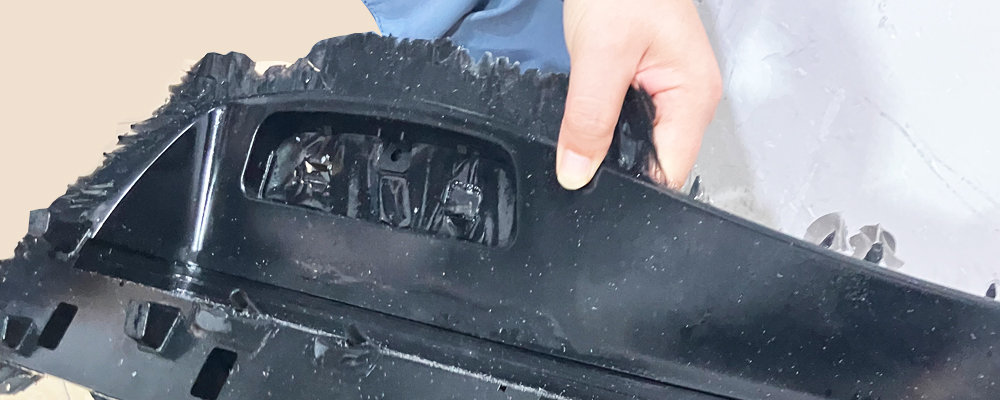
What`s factors that affect dimensional accuracy in silicone casting?
First, the master model’s quality is key. If the master isn’t accurate, the mold and casts won’t be either.
Then, the mold material and how it’s made. Silicone molds can shrink or deform, so choosing the right silicone with low shrinkage is important.
Also, the curing process—temperature and time can cause expansion or contraction.
Material selection for the cast parts matters too; Different resins or plastics have varying shrinkage rates.
Demolding techniques might introduce stress or warping.
Post-processing steps like sanding could alter dimensions if not done carefully.
TONGDA LINK`s concern:
Controlling the dimensions of prototypes made via silicone casting requires careful attention to material behavior, mold design, and process parameters. TONGDA LINK makes solutions according to the factors that may affect dimensional accuracy throughout the entire prototyping process.
We design the master model with compensation for expected shrinkage.
Use high-quality materials and precise fabrication methods like CNC or SLA 3D printing.
Then, selecting the right silicone for the mold, considering its shrinkage rate.
Process control during mold making: proper mixing, degassing to avoid bubbles, curing at controlled temperatures.
When casting, use materials with known shrinkage and adjust the master model accordingly. Process parameters like mixing ratios, degassing, pouring techniques, and curing conditions.
Post-processing steps need to be controlled to avoid removing too much material.
Inspection using tools like calipers, CMM, or 3D scanners to verify dimensions. Iterative adjustments based on measurements.
TONGDA LINK’s structured approach to ensure dimensional accuracy:
1. Master Model Preparation
Design Compensation:
Anticipate shrinkage (typically 0.1–2%, depending on the casting material and silicone mold).
Scale up the master model slightly to offset shrinkage (e.g., if resin shrinks 1%, design the master 1% larger).
Precision Fabrication:
Use high-resolution methods (e.g., SLA/DLP 3D printing, CNC machining) to create the master model with tight tolerances.
Post-process the master (sanding, polishing) to ensure smooth surfaces and accurate dimensions.
2. Mold Design and Material Selection
Silicone Mold Material:
Use low-shrinkage silicone (e.g., platinum-cure silicone) with predictable curing behavior.
Avoid tin-cure silicones for critical tolerances, as they shrink more (~1% vs. 0.1% for platinum-cure).
Mold Rigidity:
Reinforce the mold with a rigid shell (e.g., 3D-printed or fiberglass jacket) to minimize deformation during casting.
Venting and Gating:
Design vents to allow trapped air to escape, preventing voids that distort dimensions.
Position gates (pouring channels) strategically to ensure even material flow.
3. Casting Material Control
Material Selection:
Choose casting resins/plastics with low shrinkage (e.g., polyurethane resins shrink ~0.15–0.5%, epoxy ~1–2%).
Avoid materials prone to warping (e.g., some urethanes).
Pre-Mixing and Degassing:
Mix resins thoroughly to avoid uneven curing.
Degas the material (vacuum chamber) to eliminate air bubbles that cause voids or dimensional errors.
Curing Conditions:
Follow manufacturer guidelines for temperature and humidity during curing.
Use a temperature-controlled environment to minimize thermal expansion/contraction.
4. Process Control During Casting
Mold Release Agent:
Apply a thin, even layer of mold release spray to prevent sticking, which can distort parts during demolding.
Pouring Technique:
Pour slowly and evenly to avoid turbulence and air entrapment.
For complex parts, use a pressure pot to compress air bubbles and improve material flow.
Curing Time:
Avoid premature demolding, which can cause warping or deformation.
Let the part cure fully (follow material-specific curing schedules).
5. Post-Processing and Inspection
Demolding Care:
Gently flex the mold to release the part without forcing it, which can stress or distort the prototype.
Post-Cure Stabilization:
Some materials (e.g., certain resins) require post-curing to stabilize dimensions.
Dimensional Inspection:
Use calipers, micrometers, or CMM (Coordinate Measuring Machine) to verify critical dimensions.
Compare against the original CAD model with 3D scanning for high-precision parts.
Adjustments:
If dimensions are off, tweak the master model or casting process (e.g., adjust shrinkage compensation).
Key Tips for Dimensional Control:
Iterate and Test:
Make test casts and measure results to refine shrinkage compensation and process parameters.
Document Process Variables:
Track ambient temperature, humidity, mixing ratios, and curing times for consistency.
Use High-Quality Tools:
Invest in precision measurement tools (e.g., digital calipers, 3D scanners).
By combining careful design, material selection, and process control, we can achieve prototypes with tolerances as tight as ±0.1–0.3 mm using silicone casting. For ultra-high precision, consider hybrid approaches (e.g., CNC machining critical features post-casting).
The Application of Silicone Casting in Product Development:
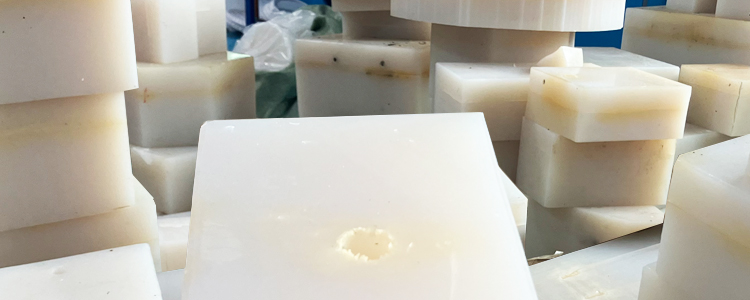
Silicone casting is particularly useful for applications in industries such as automotive, medical, consumer electronics, and consumer goods. By providing an early-stage prototype that closely simulates the final product, it helps product designers and engineers identify potential issues in design, functionality, and manufacturability.
For example, in the automotive industry, silicone casting can be used to create prototypes for interior components, seals, and gaskets that require precise fit and flexibility. In medical device development, silicone casting enables rapid testing of functional components such as housings and connectors before committing to full-scale injection molding.
From consumer electronics to medical devices, silicone casting accelerates development by:
Functional Testing: Validate ergonomics, fit, and performance.
Market Feedback: Create pre-production units for stakeholder reviews.
Bridge to Production: Refine designs before committing to high-cost tooling.

Innovate Faster with TONGDA LINK
For plastic product designers and OEMs, TONGDA LINK is more than a supplier—we’re a strategic partner. By leveraging silicone casting, precision mold manufacturing, and engineering expertise, we turn complex ideas into market-ready products.
Contact us today to discuss your high-precision molds project and experience the TONGDA LINK advantage: Reliability. Precision. Partnership.